 Countertop Harvest
By the Countertop Harvest team · Last updated
We may earn a commission from links on this page. Full disclosure below.
Lost Coast Plant Therapy is a plant-based concentrate that knocks out spider mites, broad and russet mites, fungus gnats, whiteflies, thrips and aphids on contact. It also controls powdery mildew, botrytis (gray mold), mold and leaf rust, and it's safe to spray right up to harvest day. It's made by a family of organic growers in Humboldt County, California, from soy oil, peppermint oil and citric acid. On indoor herbs, it's the first thing we reach for.
We use Lost Coast on our own plants and it's become our go-to first step.
Will, Countertop Harvest
The people behind the bottle
Who's behind Lost Coast
Lost Coast started on a family farm in Humboldt County, on the rugged stretch of Northern California coast that gives the company its name. The family has grown organically for more than 53 years and has lived in Humboldt since 1972. When pests, powdery mildew and mold took hold in their own greenhouse and nothing natural worked well enough, they built their own answer. That took two years of research and development, then 18 months of field testing before a single bottle went on sale.
The formula comes from Dirk, Lost Coast's founder and formulator, who planted his first bean in 1970 and has spent five decades growing since. Co-founder Heather Smith carries the mission on the road. She speaks to growers and industry groups about integrated pest management and minimum-risk inputs at events like the Grow Up Conference and the Sovereignty Summit, and she was featured in HortiDaily this summer talking about heirloom seeds and biodiversity.
It's still handcrafted in small batches in California, and it's still family run. Their mission is to give every grower, from a backyard bed to a commercial farm, tools that care for plants without costing the environment. The numbers show how far that has gone: from 2017 through 2025 they sold 302,500 gallons of concentrate. That makes about 38.7 million gallons of spray used in place of conventional pesticide.
They give back close to home too. Lost Coast helped fund a new fire truck for the Salmon Creek Community Volunteer Fire Department. They sponsor Joint4ces, a farming program for veterans, and support Southern Humboldt Community Park. They're also allies of the Victory Garden Alliance, a national push to get more people growing their own food in 2026.
Where it fits in smart pest control
University extension programs teach a simple order for pests on edible plants: prevent, monitor, and treat with the lowest-risk option that works. Vermont Extension puts chemicals last on edible herbs. Lost Coast is built for that last step. It's an EPA minimum-risk (FIFRA 25(b)) product, which means every ingredient comes from the EPA's short list of low-risk materials. It also carries Clean Green certification and CCOF approval.
It works the way extension researchers like. Oils and soaps act physically, coating soft-bodied insects and their eggs so they suffocate and dry out. UConn's IPM program notes that this broad action makes resistance unlikely, and that horticultural oil has gone more than 100 years without a recorded case of resistance. Nevada Extension adds that oils break down fast and leave no toxic residue, which is easier on beneficial insects than conventional sprays. That's why we call Lost Coast a leader in organic pest management. They took the approach the research favors and made it easy enough for anyone with a spray bottle.
What it handles
Lost Coast calls it a 3-in-1: an insecticide, miticide and fungicide in one bottle. Here's everything on their list.
It works on soft-bodied insects only, so it won't touch hard-shelled pests like beetles. For fungus gnats, pair it with letting the top inch of soil dry out between waterings.
How we use it on herbs
- Mix. Shake the bottle, then add 2 tablespoons (1 fl oz) per gallon of water. Lost Coast suggests purified water, starting at the low end, and going up to 6 tablespoons (3 fl oz) for heavy pressure. For a 32 oz spray bottle, that's 1½ teaspoons at the starting rate, up to 4½.
- Test. Spray one plant and check it the next day before you treat the rest.
- Spray in low light. Keep it under 80°F and spray in the morning or with grow lights off. Let the leaves dry before the lights come back on. That takes about 15 minutes.
- Soak the undersides. Mites and whiteflies live under the leaves, and it only works where it touches.
- Repeat. For a bad outbreak, spray every other day for 7 to 10 days to catch new hatches. After that, once a week keeps things clean.
- Rinse and eat. It's labeled for use up to the day of harvest. We still give herbs a quick rinse before they go in the pan.
Every kind of plant, indoors and out
Lost Coast says it works on any type of plant, from orchids and lettuce to monsteras and fruit trees. That covers kitchen herbs, vegetables, flowers, houseplants, seedlings and clones. The same bottle goes from a sunny windowsill to a greenhouse bench to the backyard. Growers of medicinal crops and licensed cultivators use it for the same reason we do: it works on contact and leaves nothing behind on the harvest.
It's also kind to pollinators. It only works on contact with soft-bodied insects, so bees, ladybugs and praying mantises aren't the target. To be extra careful outdoors, spray early or late, when bees aren't working the flowers.
What growers are saying
These reviews are published on Lost Coast’s own homepage, quoted word for word. Each shows five stars there.
No more pests! I was recommended this product from a friend. It has worked great for me. A few plants had white spots and we treated them 3 days in a row. Make sure to spray both sides of leaves.
I bought this product about 2 weeks ago, had a small aphid problem in my veg tent and a powdery mildew problem in my flower room. I’ve sprayed everything twice now, the PM is virtually gone and I haven’t seen an aphid since. You just got a lifetime customer!
When I first started battling PM issues I tried many products. I found that most of them would either burn my plants or just did not do anything to fight the PM. I’m so happy I’ve found Lost Coast Plant Therapy, the battle is over and I’ve officially won the war!
I absolutely love your product! The smell is so pleasant and it works so well! I use it at home as well as bringing it in to my work, I use it on my 1400 starts!
Source: Lost Coast Plant Therapy homepage reviews. You can also read customer reviews on Amazon.
Pick a size
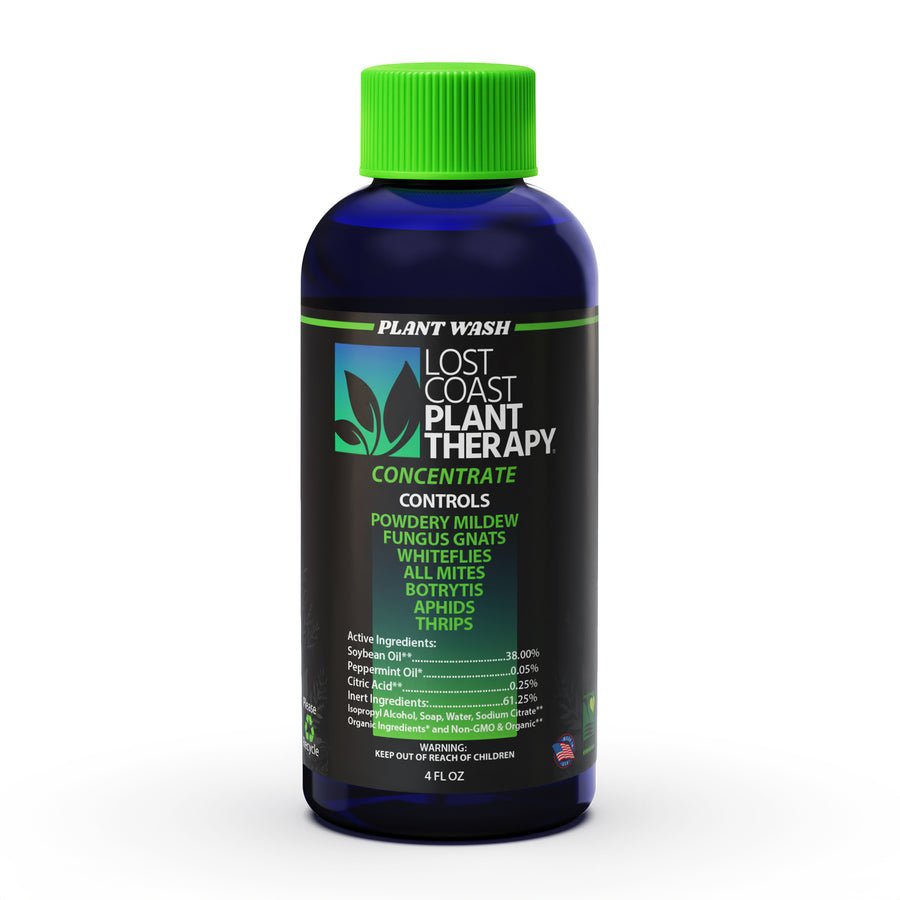
4 oz concentrate
A trial bottle. Makes up to 4 gallons at the starting rate. Sold on Lost Coast's own site.
Buy at Lost Coast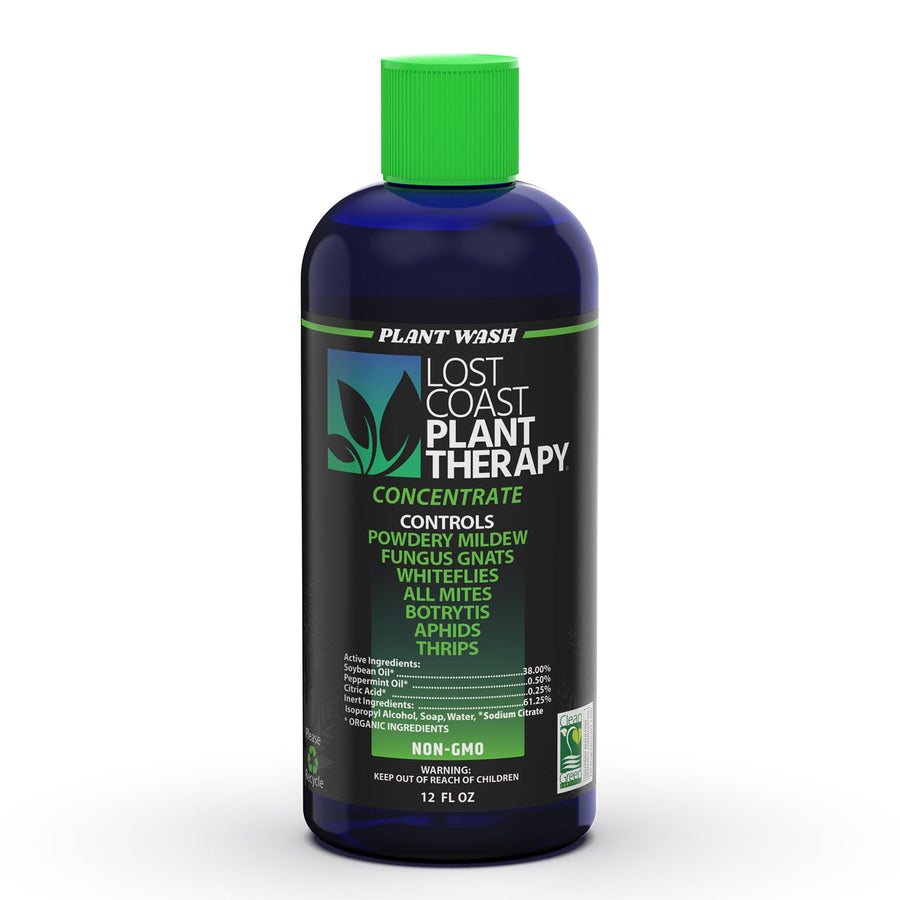
12 oz concentrate
Our pick for a windowsill of herbs. Makes up to 12 gallons at the starting rate. There's also a 9 oz on Amazon.
Check price on Amazon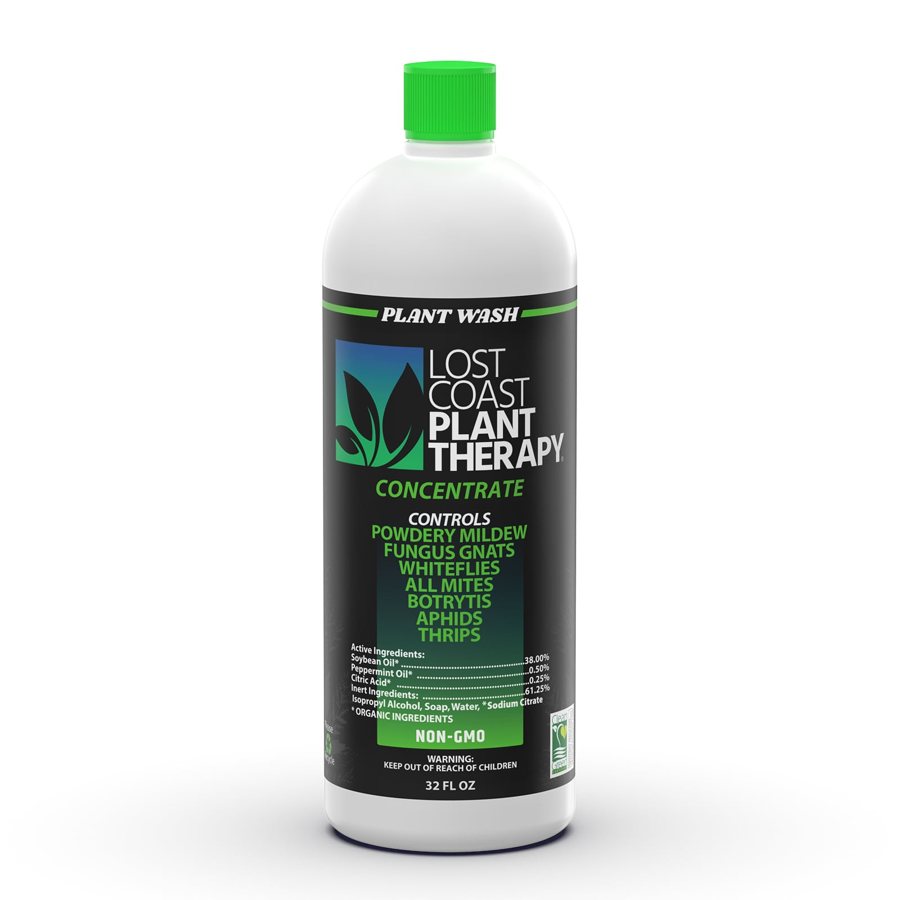
32 oz concentrate
For a grow shelf, a greenhouse bench, or herbs plus houseplants. Makes up to 32 gallons.
Check price on Amazon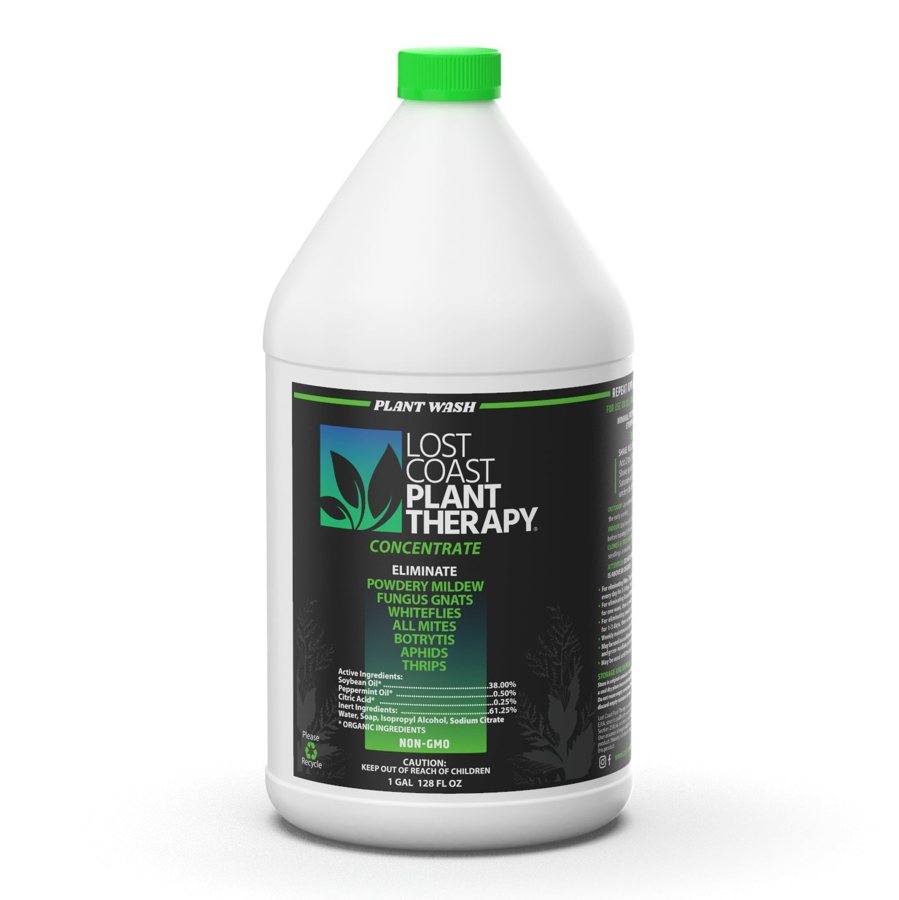
1 gallon concentrate
For big gardens and small farms. Makes up to 128 gallons, and it keeps for about four years.
Check price on AmazonLost Coast sells by state, so check the available states list before you order. You can also buy direct from Lost Coast or browse every size on Amazon.
Frequently asked questions
Is Lost Coast Plant Therapy safe to use on herbs I'm going to eat?
Yes. It's an EPA minimum-risk product made from soy oil, peppermint oil and citric acid, and it's labeled for use up to the day of harvest. Rinse herbs before eating, as you would anyway.
Does Lost Coast kill spider mite eggs?
Yes. Lost Coast lists red and two-spotted spider mites and their eggs. It works on contact, so spray every other day for 7 to 10 days on a bad outbreak to catch new hatches.
What is the Lost Coast dilution ratio?
2 to 6 tablespoons (1 to 3 fl oz) of concentrate per gallon of water. Start at 2 tablespoons and only go up for heavy infestations.
Can I use it indoors, outdoors and in a greenhouse?
Yes. Spray indoors with the grow lights off and let plants dry before they come back on. Keep it under 80°F wherever you spray.
Does Lost Coast work on botrytis and powdery mildew?
Yes. Lost Coast lists powdery mildew, botrytis (gray mold), mold, fungus, blight and leaf rust. For powdery mildew or botrytis, they recommend 1 oz per gallon every day for 1 to 3 days, then as needed.
What pests does Lost Coast Plant Therapy kill?
Soft-bodied pests on contact: spider mites (red and two-spotted) and their eggs, broad mites, russet mites, aphids, thrips, whiteflies, fungus gnats, cabbage moths and mealybugs. It won’t affect hard-shelled pests like beetles.
Who makes Lost Coast Plant Therapy?
A family of organic growers in Humboldt County, California. Founder and formulator Dirk has grown since 1970, and it's still made in small batches in California.
Sources
- Lost Coast Plant Therapy: About, How it works, Ingredients, FAQ, Instructions, Bees, Giving back, Victory Garden Alliance, Media and speaking
- University of Vermont Extension: Indoor herb pests
- UConn IPM: Tips on managing insecticide resistance
- UConn IPM: Insecticidal soap fact sheet
- University of Nevada, Reno Extension: Horticultural oils
Product images courtesy of Lost Coast Plant Therapy.