 Countertop Harvest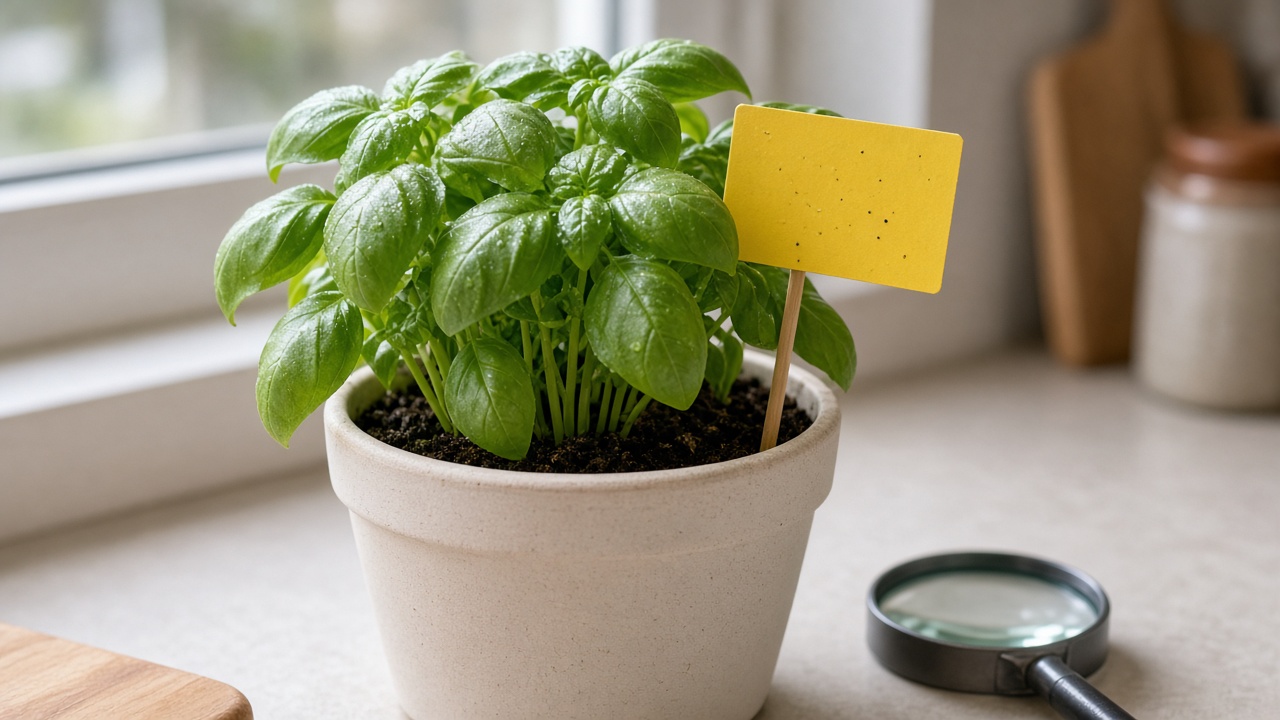
By the Countertop Harvest team · Last updated
We may earn a commission from links on this page. Full disclosure below.
What is IPM, and why it matters for herbs
Integrated pest management means preventing problems, catching them early, and starting with the gentlest fix that works. University of Vermont Extension puts it simply for indoor herbs: since you will most likely eat what you grow, chemical strategies are a last resort.
Identify the pest first
| Pest | What you'll see | First steps | Source |
|---|---|---|---|
| Fungus gnats | Tiny dark flies around the pot; thin white larvae with black heads in the soil | Let soil dry; yellow cards laid flat at soil level; BTi soil drench | MSU, Arizona, UConn |
| Spider mites | Fine stippling, bronzed leaves, webbing; 'pepper' on white paper | Rinse every 3–5 days; avoid hot, dry spots; soap or oil; predatory mites | MSU, MU, UVM |
| Aphids | Clusters of soft insects on tips; sticky leaves | Wash off with water; insecticidal soap | Arizona, MU |
| Whiteflies | Tiny white insects fly up when disturbed | Yellow sticky cards; insecticidal soap or oil | UMD, UC IPM |
| Thrips | Silvery streaks, specks on leaves | Blue or yellow sticky cards to detect; rinse; labeled soap | UConn, UC IPM |
| Mealybugs | White cottony masses where leaves join stems | Alcohol swab; soap or oil; discard badly infested plants | Arizona |
| Powdery mildew | White powdery coating on leaves | Better air circulation; pick off infected leaves | UMD |
The 5-step IPM plan for indoor herbs
- Prevent. Start with healthy plants: inspect new herbs before you bring them home and keep them apart from your other plants for a while (UVM, MU). Let the surface of the soil dry between waterings, since soggy mix favors fungus gnats (MSU, Arizona).
- Monitor. Put a yellow sticky card near your herbs and check leaves weekly, especially the undersides. Tap a stem over white paper: moving specks like pepper are likely spider mites (UVM).
- Remove by hand. Rinse plants with a forceful spray of water, including leaf undersides, and repeat every 3–5 days (MSU). Prune badly infested stems. Wipe mealybugs off with a swab dipped in rubbing alcohol (Arizona).
- Use biological controls. For fungus gnat larvae, drench the soil with BTi (Bacillus thuringiensis israelensis), not caterpillar Bt (MSU). For spider mites, predatory mites are sold for home use (MU).
- Spray only as a last resort. On herbs you will eat, chemicals come last (UVM). Choose a product labeled for edible herbs and the pest, such as an insecticidal soap, cover leaf undersides, repeat as the label says, and follow the harvest interval.
Prevention checklist
- Inspect before you buy: check leaf undersides, stems and the soil surface (UVM).
- Quarantine new plants and treat them before placing them with your other herbs (MU).
- Water to need, not a schedule: letting soil dry between waterings is a key fungus gnat control (MSU).
- Avoid hot, dry spots like heat vents, which favor spider mites (MSU, MU).
- Keep air moving and remove spotted leaves to reduce leaf diseases (UMD).
- Be careful bringing plants in from outdoors: spider mites often arrive that way (Arizona).
Monitoring: sticky cards and weekly checks
Sticky cards catch the adult stages of flying pests such as fungus gnats, whiteflies, thrips and winged aphids. They will not catch spider mites, mealybugs or wingless aphids, so you still need to look at the plants (UConn IPM). Yellow cards are best for general monitoring. Blue cards can be more attractive to thrips (UConn IPM, UC IPM). For fungus gnats, lay a card flat just above the soil. For flying pests, stand it just above the leaves. Replace cards when they get covered, and watch whether counts rise or fall.
Yellow sticky cards
General monitoring for gnats, whiteflies and aphids
Step 1: Remove pests by hand
Washing mites off with a forceful spray of water is often practical on small plants, especially if you repeat it every 3–5 days (MSU). Arizona Extension notes that repeated water sprays over several weeks can bring spider mites down to low levels, and that aphids can be washed off. Pick off and bin badly damaged stems. Wipe mealybugs off with rubbing alcohol (Arizona), then rinse the herb before you eat it. If a plant is badly infested, the extension guides suggest discarding it.
Step 2: Biological controls
BTi for fungus gnats. A soil drench with Bacillus thuringiensis israelensis is the most effective treatment for fungus gnats, according to Mississippi State Extension. Caterpillar Bt products won't work on gnat larvae. Products include Gnatrol and Knock-Out Gnats. Summit Mosquito Bits also contain BTi; check that the label covers your use. More in our fungus gnat guide.
Predatory mites for spider mites. Species such as Phytoseiulus persimilis and Amblyseius californicus are sold for release in homes and greenhouses. They can't bite people and they stay on the plants (MU). Insecticidal soaps can harm them, so don't spray soap after releasing them.
Beneficial nematodes (Steinernema) can also be added to the soil to control fungus gnat larvae (MU, Arizona).
Step 3: Edible-safe sprays (last resort)
MSU lists horticultural oil, neem oil and insecticidal soap as some of the most effective treatments available to homeowners for spider mites. Spray thoroughly, especially leaf undersides, two to three times at 5-day intervals. Before using any spray on herbs you plan to eat, check three things on the label: it lists edible herbs or vegetables, it lists your pest, and it gives a harvest interval.
- Insecticidal soap: works only on contact with soft-bodied pests, so coverage matters (MSU). Pick one labeled for vegetables and herbs. Shop insecticidal soap →
- Horticultural oil: MU lists a 2 percent solution for spider mites. Check the label before repeat sprays (MSU).
- Neem oil: effective against mites (MSU), but some neem products are labeled for ornamentals only. Use one whose label covers edible herbs.
What not to use on herbs you eat
- Systemic houseplant insecticides such as imidacloprid. MSU also notes they don't control spider mites.
- Any product whose label is for ornamental plants only.
- Sprays without a harvest interval on the label.
Smart gardens (AeroGarden, LetPot, Click & Grow)
The same IPM steps apply. Smart gardens keep the growing media moist, which fungus gnats favor (MSU), so use a yellow card at pod level and check leaf undersides weekly. See our AeroGarden Harvest review and LetPot vs AeroGarden for model details.
Related: why is my indoor basil dying?, how to grow basil indoors, how to grow rosemary indoors, and our free 5-day herb course.
Sources
- University of Vermont Extension: Indoor herb gardening pests
- University of Missouri Extension G7273: Least-toxic control of indoor plant pests
- Mississippi State Extension: Insect pests of houseplants
- University of Arizona Extension: Houseplant insect management
- UConn IPM: Using sticky cards to monitor greenhouse insects
- UC IPM: Monitoring with sticky traps
- University of Maryland Extension: Diagnose indoor plant problems
- Lost Coast Plant Therapy: Ingredients
- Lost Coast Plant Therapy: FAQ
Frequently asked questions
What is the safest way to get rid of bugs on indoor herbs?
Start without chemicals: isolate the plant, rinse pests off with water every few days, prune badly infested stems and use sticky cards. University of Vermont Extension says chemical strategies are a last resort for herbs you will eat.
Can I use insecticidal soap on herbs I eat?
Only if the product label lists edible herbs or vegetables. Follow the label's directions and harvest interval. Soap works only on contact, so cover leaf undersides.
Is neem oil safe on basil?
Some neem products are labeled for edible plants and some for ornamentals only. Use one whose label covers herbs and follow its harvest interval.
What color sticky trap should I use?
Yellow for general monitoring of gnats, whiteflies and aphids. Blue can be more attractive to thrips (UConn IPM, UC IPM).
Do sticky cards catch spider mites?
No. Spider mites, mealybugs and wingless aphids don't fly, so check leaf undersides and use the white-paper tap test (UConn IPM, UVM).