 Countertop Harvest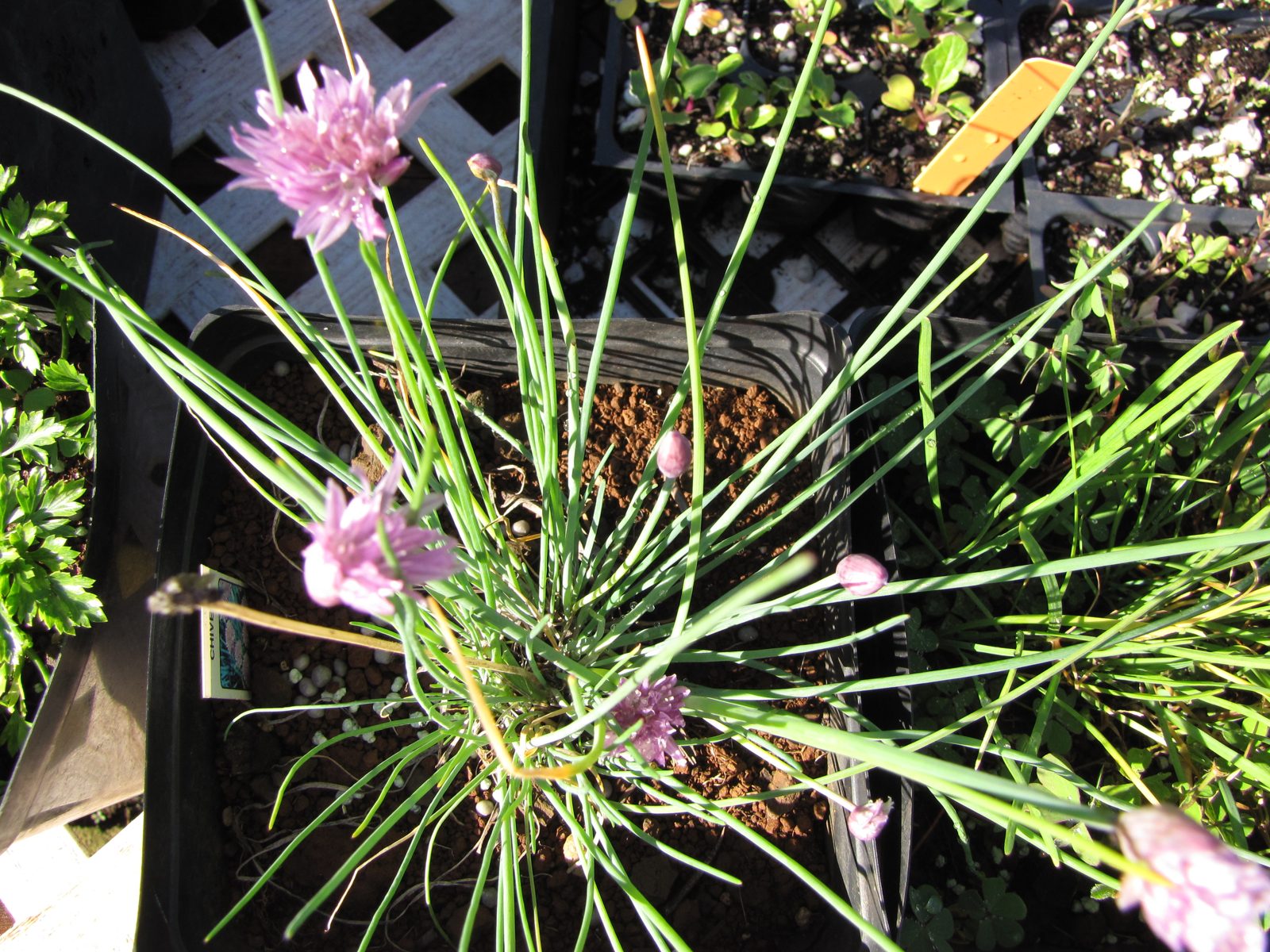
By the Countertop Harvest team · Last updated
We may earn a commission from links on this page. Full disclosure below.
Can you grow chives indoors?
Yes. UMN, Illinois and UC Master Gardeners all say chives grow easily in pots in a sunny location. Chives are a hardy perennial in the onion family that grows in clumps about 10 inches tall (Maryland), and they regrow after every cut, which makes them ideal for a kitchen windowsill. Expect slower growth in winter: UMN notes chives may not grow much when light is poor and may die back a bit, but they rally when brighter light returns.
Indoor chives at a glance
| Need | What extension sources say |
|---|---|
| Start | Rooted clumps are easiest (UMN); seed is slow, 4–6 weeks to transplants (Illinois). |
| Pot | Drainage holes and light, well-drained potting mix (UMN). |
| Light | Bright, sunny spot; 6–8 hours of direct light is best (UMN). Winter grow lights 14–16 hours a day (Maryland). |
| Water | Uniform moisture (Illinois); don't overwater (UC Master Gardeners). |
| Feeding | Half-strength liquid fertilizer every 4–6 weeks; none in winter (UMN). |
| Harvest | From about 6 inches; cut 1–2 inches above the soil (Maryland). |
| Divide | Every 2–4 years, in spring (Illinois, UC Master Gardeners). |
How to grow chives indoors, step by step
- Start from a clump or seed. UMN Extension calls rooted clumps the easiest way to grow chives. Seed works too but is slow: Illinois Extension says it can take 4–6 weeks to produce transplants. RHS suggests sowing a few seeds ¼–½ inch deep per pot.
- Use a pot with drainage. Pots must have drainage holes; use a light, well-drained houseplant potting mix (UMN).
- Give it a bright, sunny spot. Chives grow easily indoors in a bright, sunny location (UMN), with six to eight hours of direct light best. In winter, add a grow light for 14–16 hours a day (Maryland).
- Water for even moisture. Keep soil uniformly moist (Illinois) but avoid overwatering (UC Master Gardeners).
- Feed lightly. For chives in containers or a sunny window, UMN suggests liquid fertilizer at half the label strength every 4–6 weeks, and none in winter. Over-fertilizing can be harmful.
- Harvest from the base. Start at about 6 inches tall (Maryland, UC Master Gardeners) and cut leaves 1–2 inches above the soil (Maryland). Frequent harvesting keeps leaves tender (Illinois).
- Divide every few years. Divide crowded clumps every 2–4 years, ideally in spring; Illinois suggests divisions of about 4–6 bulbs.
Seeds or a clump?
- Rooted clump: the fastest start. UMN calls it the easiest and most successful method. Illinois notes the best-looking potted chives come from garden clumps dug after a freeze; clumps potted in fall tend to get leggy.
- Seed: cheap but slow, taking 4–6 weeks to reach transplant size (Illinois). Sow a few seeds per pot, about ¼–½ inch deep (RHS).
Light: window or grow light?
A bright south or west window with at least five hours of sun works for much of the year. In winter, Maryland Extension says herbs need grow lights for 14–16 hours a day. If your chives stretches and turns pale, it needs more light. Our grow light buying guide compares bars, strips and bulbs, and how much light herbs need covers hours and distance.
Smart garden with built-in light
e.g. Click & Grow Smart Garden 3
- 3 smart-soil pods, no pump
- 8W light on a 16h on / 8h off timer
- Check Click & Grow's site for current chives pods
Countertop hydroponic garden
AeroGarden or LetPot
- Light and timer handled for you
- Hydroponic: needs plant food
- Compare them in LetPot vs AeroGarden
Harvesting chives so they keep regrowing
Cut whole leaves near the base with scissors, 1–2 inches above the soil (Maryland), starting from the outside of the clump and leaving some leaves to keep it growing (UC Master Gardeners). Regular cutting keeps leaves from getting tough (Illinois). If your plant flowers, the blooms are edible; cut spent flower stalks at the soil line to keep it productive (UMN). Chop and freeze extras; there's no need to thaw before using (UMN).
Common indoor chive problems
- Thin, floppy, pale leaves: too little light.
- Slow growth in winter: normal in low light (UMN); add a grow light or wait for spring.
- Yellowing tips with soggy soil: overwatering or poor drainage.
- Crowded, weak clump: time to divide.
Building a herb shelf? See the best herbs to grow indoors for beginners, plus our guides to parsley, basil, mint and cilantro.
Also try: rosemary (trickier, but rewarding).
Sources
- UMN Extension: Growing chives
- Illinois Extension: Chives
- University of Maryland Extension: Chives
- UC Master Gardeners of Santa Clara County: Chives
- RHS: How to grow chives
- University of Maryland Extension: Growing herbs indoors
Frequently asked questions
Are chives easy to grow indoors?
Yes. UMN, Illinois and UC Master Gardeners all say chives grow easily in pots in a bright, sunny location.
How much light do indoor chives need?
UMN Extension says six to eight hours of direct light is best. In winter, Maryland Extension recommends grow lights for 14–16 hours a day.
How do I harvest chives so they grow back?
Cut leaves near the base, about 1–2 inches above the soil (Maryland), starting from the outside and leaving some leaves to keep growing.
Why are my indoor chives not growing in winter?
Low winter light slows chives and they may die back a bit, but UMN says they rally when brighter light returns. A grow light helps.
Should I grow chives from seed or a clump?
A rooted clump is the easiest and fastest (UMN). Seed works but takes 4–6 weeks to reach transplant size (Illinois).