 Countertop Harvest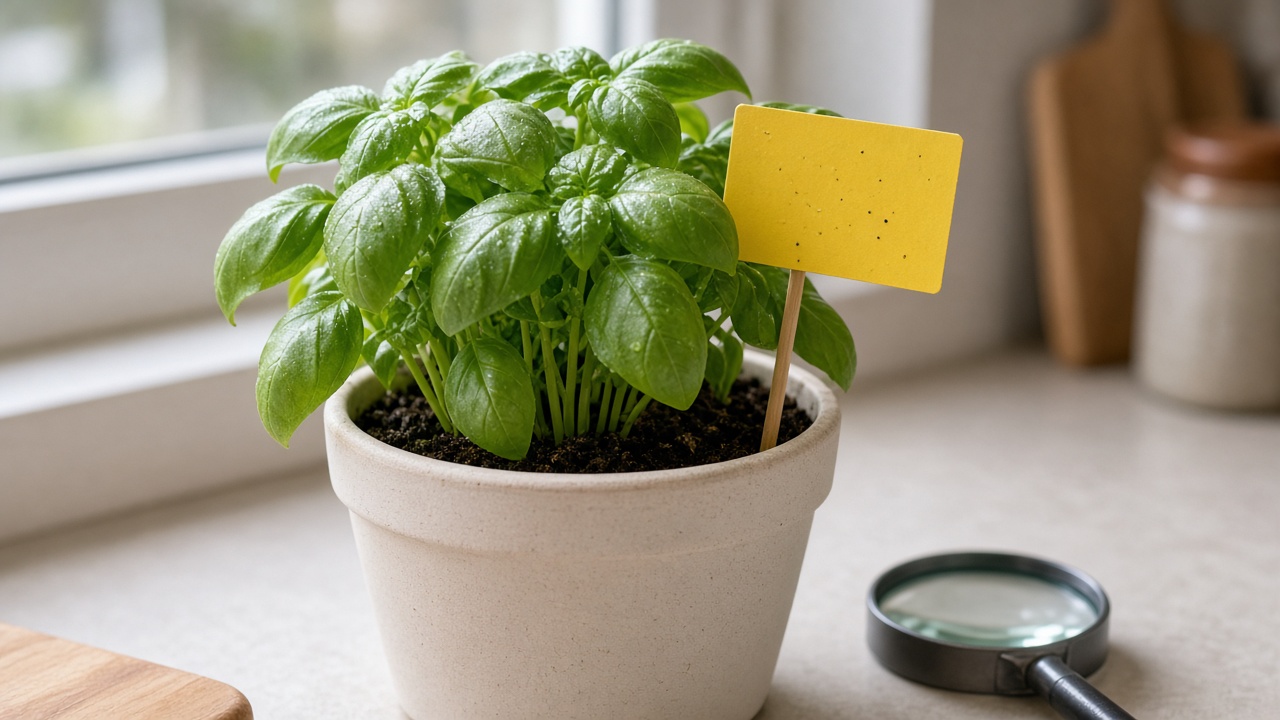
By the Countertop Harvest team · Last updated
We may earn a commission from links on this page. Full disclosure below.
What are fungus gnats?
They are tiny dark flies, about 1/16 to 1/8 inch long (UVM). The adults are mostly a nuisance. The larvae do the damage: they live in the potting mix and feed on organic matter and root hairs (MSU). Heavy infestations can make young plants wilt (MU).
Why they love herb pots and smart gardens
Fungus gnat larvae thrive in growing media that stays too moist (MSU). Highly organic soil and fish emulsion can also favor them (Arizona). Herbs that are watered often, and smart gardens with constantly damp pods, give them what they need.
How to get rid of fungus gnats, step by step
- Confirm it's fungus gnats. Adults are tiny dark flies around the pot. Larvae are slender and white with shiny black heads, about a quarter inch long or less, and live in the soil (MSU).
- Let the soil dry. Overwatering favors the larvae. Allow the soil to dry properly between waterings (MSU).
- Trap the adults. Lay yellow sticky cards flat just above the soil, which UConn IPM finds more effective for gnats than standing them up.
- Drench with BTi. Water the soil with a BTi product to kill the larvae. Mississippi State Extension calls it the most effective treatment. Caterpillar Bt won't work.
- Repot if needed. For stubborn cases, remove and discard the growing media and repot in sterile media (MU).
- Keep monitoring. The life cycle is about 21 days (Arizona), so keep cards out and keep watering carefully for a few weeks.
BTi: the main treatment
BTi is a soil bacterium that targets the larvae of flies such as fungus gnats. Mississippi State Extension names Gnatrol and Knock-Out Gnats as two readily available brands and warns that Bt products labeled for caterpillars will not work on fly larvae. Summit Mosquito Bits are another BTi product that people use; check that the label covers your use before applying.
BTi granules (e.g. Mosquito Bits)
Soil drench for gnat larvae. Follow the label.
Other options
- Beneficial nematodes (Steinernema) added to the soil to control larvae (MU, Arizona).
- Repotting in fresh sterile media (MU).
- A trap crop: MU describes placing a pot of sprouted wheat among plants, letting gnats lay eggs in it for a few days, then discarding it outdoors and repeating every two weeks.
- Sprays for adults: MU notes that adult sprays need repeating every few days for at least two weeks, because new adults emerge daily. On edible herbs, use only products labeled for them.
Fungus gnats in a smart garden
The same steps apply. Lay a yellow card at pod level so you can see whether numbers are falling. Clean and dry the unit fully between grows. If you are starting over, see seed pod alternatives.
For other bugs, read our full indoor herb pest control (IPM) guide. Also see why is my indoor basil dying? and the best herbs to grow indoors.
Sources
- Mississippi State Extension: Insect pests of houseplants
- University of Missouri Extension G7273
- University of Arizona Extension: Houseplant insect management
- University of Vermont Extension: Indoor herb gardening pests
- UConn IPM: Using sticky cards
- Lost Coast Plant Therapy: FAQ
Frequently asked questions
How do I get rid of fungus gnats in my herbs?
Let the soil dry between waterings, trap adults with yellow sticky cards laid flat on the soil, and drench the soil with BTi to kill larvae. Mississippi State Extension calls BTi the most effective treatment.
Do fungus gnats hurt herbs?
Adults are mostly a nuisance, but larvae feed on root hairs, and heavy infestations can make young plants wilt (MSU, MU).
Will regular Bt kill fungus gnats?
No. Bt products for caterpillars don't work on fly larvae. You need Bacillus thuringiensis israelensis (BTi) (MSU).
How long does it take to get rid of fungus gnats?
Plan on a few weeks. The life cycle is about 21 days (University of Arizona Extension), so keep cards out and keep watering carefully.
Why do I have fungus gnats in my AeroGarden?
Constantly moist growing media favors the larvae (MSU). Use yellow cards at pod level and clean the unit between grows.